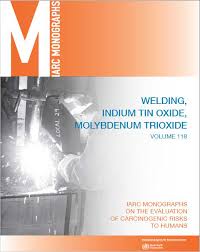
Welding Fumes and Cancer Risk: The Evidence That Changed Workplace Exposure Control IARC Monograph 118
LEVCentral Expert Commentary
For many years, welding fume was widely regarded as an unpleasant workplace contaminant that could cause irritation, metal fume fever and respiratory disease. While these risks were recognised, the long-term cancer risks associated with welding activities were often underestimated or overlooked.
That changed following the publication of IARC Monograph 118.
After reviewing decades of epidemiological studies, occupational exposure data, toxicological research and mechanistic evidence, the IARC Working Group concluded that welding fumes are carcinogenic to humans.
Importantly, the review found that the increased incidence of lung cancer among welders could not be adequately explained by smoking habits, asbestos exposure or other workplace factors alone. The evidence demonstrated that exposure to welding fumes themselves was associated with increased lung cancer risk.
This conclusion represented a significant shift in occupational health understanding and has had major implications for employers, occupational hygienists, LEV designers, safety professionals and duty holders.
The findings directly influenced regulatory expectations across many countries, including the United Kingdom.
Source Document
View the IARC Monograph here:
Source: IARC
Document Type: Construction Health Guidance
Status: Published 2018
Last reviewed by LEVCentral: June 2026
Why This Research Matters
Historically, many workplaces focused control efforts primarily on stainless steel welding due to concerns surrounding chromium VI and nickel compounds.
The IARC review found evidence of increased lung cancer risks across multiple welding processes and materials, including both arc and gas welding activities. The Working Group concluded that the increased cancer risk was not limited solely to stainless steel welding operations.
This was particularly important because it challenged the assumption that mild steel welding represented a lower health risk.
The research demonstrated that all welding fume should be regarded as hazardous and controlled accordingly.
The Impact on HSE Guidance
In February 2019, the Health and Safety Executive (HSE) issued revised enforcement expectations regarding welding fume exposure.
The revised position stated that:
- Exposure to all welding fume must be adequately controlled.
- This includes welding of mild steel.
- Suitable engineering controls should be provided wherever welding is undertaken.
- Respiratory Protective Equipment (RPE) may be required in addition to engineering controls.
- Outdoor welding activities may also require effective controls where exposure cannot be adequately prevented.
The revised expectations represented one of the most significant changes in occupational hygiene enforcement in recent years.
For many organisations, it required a complete reassessment of welding extraction systems, LEV performance, RPE programmes and exposure management strategies.
Key Findings from the Research
Welding Fumes Cause Lung Cancer
The Working Group concluded that increased risks of lung cancer were consistently observed among welders across multiple studies and industries.
After reviewing potential confounding factors, the researchers concluded that exposure to welding fumes could be identified as the underlying cause of the increased cancer risk.
Smoking Does Not Fully Explain the Risk
A common argument historically suggested that elevated cancer rates among welders could simply be explained by smoking habits.
The review examined studies that controlled for smoking and found that increased lung cancer risks remained present even after adjustment. Positive associations were also identified in some analyses involving non-smokers and infrequent smokers.
Asbestos Does Not Fully Explain the Risk
The review also considered whether asbestos exposure might account for the elevated lung cancer risk observed in welding populations.
After reviewing studies that adjusted for asbestos exposure, the Working Group concluded that asbestos exposure alone could not explain the excess risk identified among welders.
All Welding Fume Should Be Controlled
The review found increased risks associated with both gas welding and arc welding operations.
The evidence did not support limiting concern to specific welding processes or specific metals.
This supports the modern occupational hygiene principle that all welding fume should be regarded as potentially harmful and controlled at source wherever reasonably practicable.
Occupational Hygiene Implications
The findings reinforce several core occupational hygiene principles:
Eliminate or Reduce Exposure at Source
The most effective control measure remains preventing contaminants entering the worker’s breathing zone.
This is typically achieved through:
- Local Exhaust Ventilation (LEV)
- On-torch extraction systems
- Fixed extraction hoods
- Downdraught extraction systems
- Automated welding enclosures
Exposure Monitoring Remains Important
The review highlights the complexity of welding exposures, which may include:
- Metal particulates
- Ultrafine particles
- Chromium compounds
- Nickel compounds
- Ozone
- Nitrogen oxides
- Carbon monoxide
Exposure levels vary according to process, materials, enclosure, ventilation and work practices.
Control Verification Is Critical
Installing extraction alone is not enough.
Employers must ensure systems are:
- Correctly designed
- Properly commissioned
- Maintained
- Thoroughly examined and tested
- Used correctly by operators
Poorly positioned extraction can leave workers exposed despite the presence of LEV.
What This Means for Duty Holders
Duty holders should ask:
- Are welding fumes being captured at source?
- Is the LEV system achieving effective contaminant capture?
- Have exposures been adequately assessed?
- Are operators trained in correct extraction positioning?
- Is respiratory protection required?
- Are controls being verified through inspection and testing?
If these questions cannot be confidently answered, additional assessment may be required.
LEVCentral Takeaway
The publication of IARC Monograph 118 fundamentally changed the conversation around welding fume exposure.
The evidence demonstrated that welding fumes are not simply a nuisance contaminant but a recognised human carcinogen associated with increased lung cancer risk. This conclusion could not be adequately explained by smoking, asbestos exposure or other confounding factors.
The resulting changes in HSE enforcement expectations have reinforced the need for robust exposure control strategies centred on effective LEV design, commissioning, verification and ongoing performance management.
For employers, the message is clear:
If welding fume is being generated, it must be controlled.
Further Resources
Recommended Learning
LEV Fundamentals for Welding Operations
Understand how extraction systems capture welding contaminants before they enter the breathing zone.
LEV Hood Design and Positioning
Learn why extraction effectiveness depends heavily on hood placement and airflow characteristics.
LEV Commissioning and Performance Verification
Explore how commissioning demonstrates that installed extraction systems achieve intended exposure control outcomes.
Thought Leadership
The welding fume story provides one of the clearest examples of how occupational hygiene evolves.
The hazard itself did not suddenly change in 2019. What changed was the quality and weight of evidence available to regulators and scientists.
For LEV professionals, this serves as an important reminder:
Effective exposure control should not be driven solely by legal compliance. It should be driven by an understanding of the health outcomes that the control system is intended to prevent.
When the evidence shows that exposure can contribute to occupational cancer, achieving adequate control is no longer simply a technical requirement—it becomes a moral and professional obligation.

