HSE Research Report RR1146 – Measuring and Controlling Emissions from Polymer Filament Desktop 3D Printers
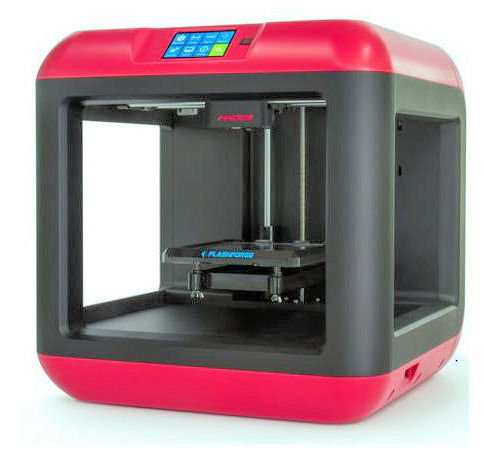
HSE Research Report RR1146 investigates airborne emissions generated during the operation of polymer filament desktop 3D printers and evaluates practical control measures for reducing exposure.
The research was undertaken following concerns about the increasing use of affordable desktop 3D printers in schools, colleges, universities and workplaces. Many of these printers use fused filament fabrication (FFF) technology, where plastic filament is heated and extruded through a nozzle to create three-dimensional objects.
The study examined emissions from commonly used filament materials including:
- Polylactic Acid (PLA)
- Acrylonitrile Butadiene Styrene (ABS)
The research assessed:
- Ultrafine particle emissions
- Volatile Organic Compound (VOC) emissions
- Printer operating temperatures
- Filament selection
- Enclosure effectiveness
- Air filtration systems
- Exposure-control measures
The report provides valuable evidence for organisations using desktop 3D printers and highlights practical methods for reducing exposure to airborne contaminants.
This resource is relevant to:
- Occupational Hygienists
- LEV Designers
- P601 TExT Engineers
- Manufacturing/Process Engineers
- Health & Safety Professionals
- Duty Holders
Source Document
View the HSE RR here:
Source: Health and Safety Executive (HSE)
Document Type: Research Report (RR1146)
Status: Published Research 2019
Last reviewed by LEVCentral: June 2026
LEVCentral Expert Commentary
Desktop 3D printing is often perceived as a relatively low-risk activity because the process appears clean and generates little visible contamination. RR1146 demonstrates why this assumption should be challenged.
The HSE research found that polymer filament printers can emit large quantities of ultrafine particles and volatile organic compounds during operation. Many of these particles are sufficiently small to enter the respiratory system and reach deep regions of the lungs. Some filament materials were also found to release chemicals known to be hazardous to health when heated.
From an occupational hygiene perspective, the report is particularly important because it focuses on a technology that has become widespread before its health implications were fully understood.
The research identified several practical measures capable of significantly reducing emissions, including:
- Selecting lower-emission filament materials
- Using lower nozzle temperatures where practicable
- Enclosing the printer
- Installing filtered extraction systems
- Allowing sufficient clearance time before opening enclosures
One of the most significant findings was that enclosing the printer within a hood fitted with filtration dramatically reduced emissions released into the room environment. HSE also identified the importance of maintaining a clearance period after printing to allow airborne contaminants to be removed before the enclosure is opened.
For LEV professionals, the report provides an excellent example of applying traditional exposure-control principles to emerging technologies. Although desktop 3D printers may appear very different from welding, woodworking or metalworking processes, the hierarchy of control remains the same:
- Eliminate or reduce emissions where possible.
- Contain contaminants at source.
- Apply engineering controls.
- Verify effectiveness.
The report also demonstrates why exposure assessment should focus on actual contaminant generation rather than visible emissions alone.
Key Learning Points
3D Printers Generate Airborne Emissions
The research found that heated polymer filaments emitted large numbers of ultrafine particles and VOCs capable of being inhaled.
Filament Selection Matters
Different filament materials generated significantly different emission profiles and emission rates.
Enclosures Significantly Reduce Exposure
The most effective control strategy investigated involved enclosing the printer and filtering extracted air.
Emerging Technologies Still Require Risk Assessment
The report reinforces the importance of COSHH assessments and exposure-control strategies even where processes appear relatively low risk.
Further Resources
- EH40 Workplace Exposure Limits
- BS EN 689:2018 – Workplace Exposure Assessment by Inhalation to Chemical Agents
- HSG258 – Controlling Airborne Contaminants at Work
- CLEAPSS G276 – 3D Printing in Schools and Colleges
- Casella Air Sampling Solutions Handbook
Recommended Learning
- M200 Basic Principles of Occupational Hygiene
- M501 Measurement of Hazardous Substances
- P602 LEV Design Principles
- P600 Methods for Testing Effectiveness of LEV
- P304 COSHH Risk Assessment Fundamentals
LEVCentral Observation
RR1146 is a useful reminder that occupational hygiene often has to respond to emerging technologies before long-term health effects are fully understood.
The report demonstrates how fundamental exposure-control principles can be applied to new processes and highlights the importance of evidence-based engineering controls.
As desktop 3D printing continues to expand across education, research and manufacturing sectors, the findings remain highly relevant to anyone responsible for protecting users from airborne contaminants generated during additive manufacturing processes.

