Interview with Phil the Welder
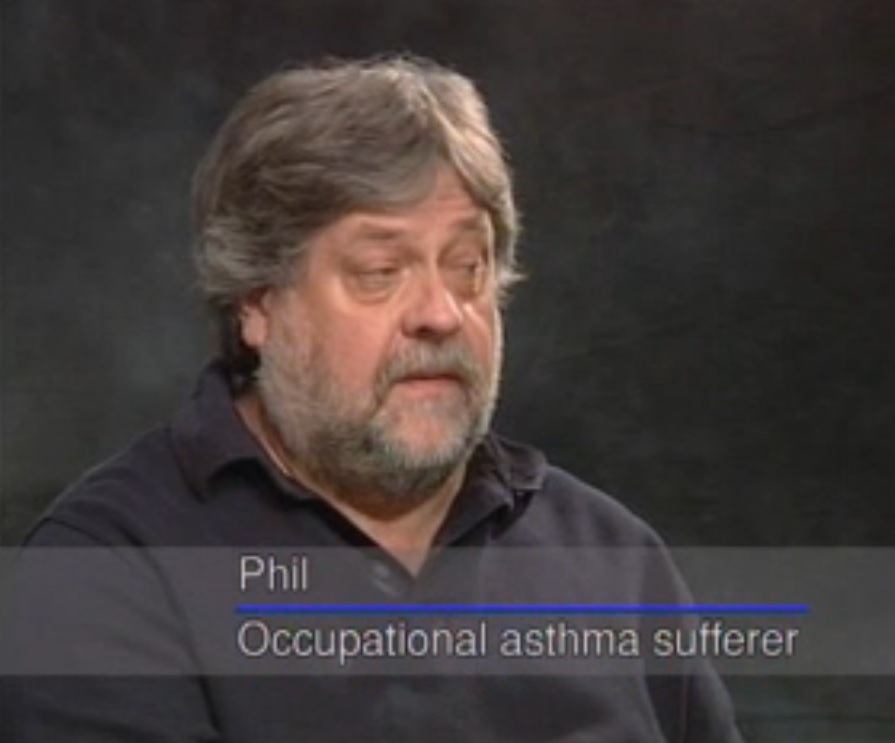
HSE Video: Dr David Fishwick interviews Phil Hydes, asthma sufferer
Click here to be redirected to the HSE website and watch the video.
A Powerful Reminder of Why Welding Fume Control Matters
LEVCentral Expert Commentary
Technical guidance, exposure limits and airflow measurements are all important parts of occupational hygiene and LEV practice. However, it is easy to lose sight of the reason these controls exist in the first place: protecting people from developing preventable occupational disease.
This interview with Phil, a former welder diagnosed with occupational lung disease, provides a personal account of the long-term health consequences associated with workplace exposure. The video has been widely used by the Health and Safety Executive (HSE) as part of its welding fume awareness campaigns and remains one of the most effective resources available for communicating the human impact of inadequate exposure control.
What makes this resource particularly powerful is that it moves beyond technical discussions and focuses on the lived experience of someone whose health has been permanently affected. Phil describes how respiratory illness has changed his daily life and highlights the challenges that can arise when occupational disease develops after years of exposure.
For employers, supervisors and duty holders, the video serves as an important reminder that exposure control measures are not simply regulatory requirements. They exist to prevent life-changing health outcomes that may only become apparent years after exposure has occurred.
For LEV professionals, the interview reinforces the importance of effective source control. Welding fume contains a complex mixture of hazardous substances, including fine particulate matter and metal oxides, many of which can penetrate deep into the lungs. HSE’s current position is clear: all welding fume should be adequately controlled regardless of the material being welded.
The video is particularly useful for training sessions, toolbox talks, welding awareness programmes and discussions with clients who may struggle to appreciate the significance of welding fume exposure. Sometimes a personal story communicates the importance of control measures more effectively than any technical report or risk assessment.
Original Video
Key Learning Points
- Occupational lung disease can have life-changing consequences.
- Welding fume exposure should never be regarded as a normal part of the job.
- The health effects of exposure may not become apparent until many years later.
- Effective source control remains the preferred method of exposure prevention.
- LEV systems play a critical role in controlling welding fume exposure.
- Respiratory protective equipment should not be viewed as a substitute for effective engineering controls.
- Training and awareness are essential components of exposure prevention.
- Personal experiences can provide powerful evidence of the importance of workplace health protection.
- Prevention is always preferable to managing the consequences of occupational disease.
- Every exposure control measure ultimately exists to protect workers’ long-term health.
Source Document Information
Organisation: Health and Safety Executive (HSE)
Resource: Interview with Phil the Welder
Document Type: Awareness and Training Video
Primary Topics: Welding Fume, Occupational Lung Disease, Exposure Control, Health Protection, Worker Awareness
Audience: Welders, Employers, Supervisors, LEV Engineers, Occupational Hygienists, Health & Safety Professionals and Training Providers
Further Resources
- HSE Welding Fume: Protect Your Workers Campaign
- HSE Welding Essentials (WL Series)
- Local Exhaust Ventilation for the Control of Welding Fumes in the Construction Industry
- HSG258 – Controlling Airborne Contaminants at Work
- BOHS Breathe Freely Campaign
- IARC Welding Fume and Cancer Risks
Recommended Learning
- M200 Basic Principles of Occupational Hygiene
- M501 Measurement of Hazardous Substances
- M505 Control of Hazardous Substances
- M507 Health Effects of Hazrdous Substances
- P600 Methods for Testing Performance of LEV
- P601 LEV Thorough Examination & Testing
- P602 LEV Basic Principles of Design
- P603 CoSHH PPE
- P604 LEV Commissioning & Performance Evaluation
- P304 Fundamentals of Risk Assessment & Control
Thought Leadership
The LEV industry often focuses on technical performance indicators such as airflow rates, pressure measurements, capture velocities and commissioning reports. Whilst these are all important, resources such as this remind us that the ultimate purpose of every ventilation system is far simpler: preventing people from becoming ill.
Phil’s story highlights a challenge faced by many occupational health professionals. The effects of exposure often occur years after the work activity has taken place, making it easy for organisations to underestimate the importance of effective controls. By the time symptoms develop, opportunities for prevention may already have been lost.
This is why welding fume control remains such a significant issue. The success of an LEV system should not be judged solely by engineering measurements but by its ability to prevent future cases of occupational disease. In that sense, videos such as this may be among the most important training resources available to the profession.

