IChemE Book – Dust Explosion Prevention and Protection – A Practical Guide
One of the Definitive Engineering References on Combustible Dust Hazards
LEVCentral Expert Commentary
Few subjects within occupational hygiene combine chemistry, physics, process engineering and safety engineering quite like combustible dust explosions. For engineers responsible for dust extraction systems, understanding how explosions occur—and how they can be prevented—is every bit as important as understanding airflow or hood design.
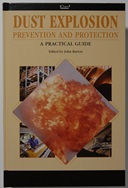
Dust Explosion Prevention and Protection – A Practical Guide, edited by John Barton and published by Gulf Professional Publishing, is widely regarded as one of the most authoritative practical references available on combustible dust hazards. First published in 2002, the book brings together Oand updates three highly respected Institution of Chemical Engineers (IChemE) guidance volumes originally produced between 1985 and 1988, creating a single comprehensive reference for engineers, designers and safety professionals.
Rather than concentrating on a single industry, the book examines combustible dust hazards across a wide range of sectors, including food manufacture, grain handling, woodworking, chemicals, pharmaceuticals, plastics, metals and minerals. Its emphasis is firmly on practical engineering, explaining not only why dust explosions occur but also how they can be prevented and, where prevention is not possible, how their consequences can be mitigated.
For LEV professionals, the book is particularly valuable because dust collection systems often form part of the explosion risk. Cyclones, bag filters, silos, ductwork and conveying systems can all become locations where combustible dust clouds are generated. Understanding explosion protection is therefore an essential part of competent LEV design.
Obtain the Book
Second-hand copies are also widely available through specialist engineering booksellers and online marketplaces, including eBay & Amazon, often representing excellent value for what remains a standard reference text.
Key Learning Points
The book covers:
- Fundamentals of combustible dust explosions.
- Dust explosibility testing.
- Ignition sources.
- Explosion prevention strategies.
- Inerting techniques.
- Explosion containment.
- Explosion suppression systems.
- Explosion venting.
- Explosion vent sizing.
- Vent ducts and safe discharge areas.
- Explosion isolation.
- Protection of interconnected vessels.
- Rotary valves and explosion isolation devices.
- Dust handling systems.
- Cyclones and bag filters.
- Bucket elevators.
- Silos and storage vessels.
- Pneumatic conveying.
- Risk assessment.
- Relevant engineering standards and legislation.
Source Information
Editor: John Barton
Contributors: Institution of Chemical Engineers (IChemE)
Title: Dust Explosion Prevention and Protection – A Practical Guide
Publisher: Gulf Professional Publishing (Elsevier)
First Published: 2002
Length: Approximately 350 pages
Document Type: Engineering Reference Book
Primary Topics: Combustible Dust, Dust Explosions, DSEAR, Explosion Venting, Explosion Suppression, Explosion Isolation, Process Safety, LEV Design.
LEVCentral Perspective
This is one of those books that changes the way engineers think about dust collection systems.
Many LEV engineers understandably concentrate on capturing airborne contaminants. This book reminds us that once combustible dust has been collected, a completely different engineering challenge begins.
Dust collectors, cyclones and silos are not simply waste collection devices—they can become potential explosion vessels if combustible dust, oxygen and an ignition source coincide. Consequently, effective LEV design must consider not only airflow performance but also explosion protection, isolation and safe pressure relief.
The book excels because it links theory with practical engineering. It explains why ignition occurs, how pressure develops during a deflagration and why different protection methods—such as venting, suppression and containment—are appropriate for different applications.
Although standards and legislation have continued to evolve since publication, the underlying engineering principles remain highly relevant and continue to underpin modern combustible dust protection.
Further Resources
- HSG103 – Safe Handling of Combustible Dusts: Precautions Against Explosions
- Dangerous Substances and Explosive Atmospheres Regulations (DSEAR) Approved Code of Practice (L138)
- SHAPA – Sizing of Explosion Relief Vents (Updated 2022)
- SHAPA – Dust Testing for DSEAR & ATEX Compliance
- SHAPA – Rotary Valves
- BS EN 14491 – Dust Explosion Venting Protective Systems
- BS EN 14797 – Explosion Venting Devices
- NFPA 68 – Standard on Explosion Protection by Deflagration Venting
- NFPA 69 – Standard on Explosion Prevention Systems
Recommended Learning
- OXY103 Masterclass DSEAR & ATEX for LEV Specialists
- M505 Control of Hazardous Substances
- P600 Methods for Testing Performance of LEV
- P601 LEV Thorough Examination & Testing
- P602 LEV Basic Design Principles
- P604 LEV Commissioning & Performance Evaluation
Thought Leadership
One of the most important lessons this book teaches is that dust collection does not eliminate risk—it changes its location.
An effective LEV system removes combustible dust from the workplace atmosphere, improving occupational health. However, that same dust may then become concentrated within filters, cyclones, ductwork or storage vessels where the conditions for an explosion can exist. This means that occupational hygiene and process safety are inseparable disciplines.
For LEV professionals, this has significant implications. A successful dust extraction system should not only achieve effective contaminant capture but should also integrate appropriate explosion protection measures where combustible dusts are present. Venting, suppression, isolation and ignition prevention are not optional extras; they are often essential components of a complete engineering solution.
From a LEVCentral perspective, Dust Explosion Prevention and Protection remains one of the finest practical references available for understanding this wider engineering picture.
It complements HSG103 and modern DSEAR guidance exceptionally well, providing the detailed technical background needed by engineers responsible for designing, commissioning and managing dust collection systems handling combustible materials.

