HSE Safety Alert – Change in Enforcement Expectations for Mild Steel Welding Fume
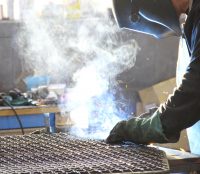
HSE Safety Alert – Change in Enforcement Expectations for Mild Steel Welding Fume

Change in Enforcement Expectations for Mild Steel Welding Fume

In February 2019, HSE issued one of the most significant occupational hygiene and LEV-related safety alerts of the last decade.

Following new scientific evidence from the International Agency for Research on Cancer (IARC), HSE announced that exposure to all welding fume, including mild steel welding fume, should be regarded as a carcinogenic health risk. As a result, HSE immediately strengthened its enforcement expectations regarding welding fume control.

The safety alert established a clear expectation that:

  • All indoor welding activities require effective engineering controls.
  • Local Exhaust Ventilation (LEV) should be used wherever reasonably practicable.
  • Respiratory Protective Equipment (RPE) must be used where LEV alone does not provide adequate control.
  • Suitable RPE should be provided for outdoor welding.
  • Welding should not be undertaken without suitable exposure controls, regardless of duration.

The bulletin fundamentally changed how organisations assess and control welding fume exposure and continues to influence inspection and enforcement activity throughout the UK.

This resource is relevant to:

  • Welders
  • Welding Supervisors
  • LEV Designers
  • LEV Installers
  • Commissioning Engineers
  • P601 TExT Engineers
  • Occupational Hygienists
  • Health & Safety Professionals
  • Fabrication Managers
  • Duty Holders

Source Document

View the HSE guidance here:

Source: Health and Safety Executive (HSE)
Document Type: Safety Alert (STSU1-2019)
Status: Current Enforcement Position
Last reviewed by LEVCentral: June 2026

LEVCentral Expert Commentary

Few HSE Alerts have had a greater impact on the LEV profession than the 2019 Welding Fume Safety Alert.

Prior to this announcement, many organisations differentiated between stainless steel welding and mild steel welding when assessing health risks. The revised scientific evidence demonstrated that exposure to all welding fume can cause lung cancer, with limited evidence also linking exposure to kidney cancer. HSE therefore removed the distinction between mild steel and stainless steel welding from an enforcement perspective.

The most important consequence for industry was the recognition that general ventilation alone is no longer considered sufficient to control welding fume exposure indoors. HSE made it clear that suitable engineering controls, typically LEV, are expected for all indoor welding activities.

For LEV professionals, this document effectively transformed welding fume control from a recommended good practice into a regulatory expectation.

The guidance also highlighted the presence of manganese within welding fume. While the cancer risk attracted most attention, HSE noted that manganese exposure may contribute to neurological effects similar to Parkinson’s disease, reinforcing the need for effective exposure control.

From a practical perspective, organisations should now ensure that:

  • Suitable LEV is provided for indoor welding.
  • LEV systems are commissioned correctly.
  • Systems undergo statutory Thorough Examination and Test (TExT).
  • Operators are trained in correct use.
  • Suitable RPE is provided where residual exposure remains.
  • Outdoor welding activities are assessed and controlled.
  • Risk assessments reflect the 2019 enforcement changes.

The bulletin also aligns closely with HSE’s wider occupational lung disease strategy and remains a key reference document when discussing welding fume control during inspections, audits and exposure assessments.


Key Learning Points

All Welding Fume Is Considered Hazardous

HSE now expects controls for all welding fume, including mild steel welding fume, due to the recognised cancer risk.

LEV Is Expected Indoors

General ventilation alone is not considered sufficient for indoor welding operations. Suitable engineering controls such as LEV are required.

Outdoor Welding Still Requires Controls

Where LEV is not practicable outdoors, suitable RPE should be used to control exposure.

Exposure Control Must Be Demonstrable

Employers must ensure controls are maintained, used correctly and subject to statutory examination where required.


Further Resources


Recommended Learning


Thought Leadership


LEVCentral Observation

The 2019 Welding Fume Safety Alert represents a watershed moment for occupational hygiene and LEV management. It reinforced a simple but important message:

There is no known safe level of exposure to welding fume

For duty holders, this means welding fume control can no longer be viewed as optional or dependent upon the type of metal being welded.

Effective engineering controls, competent LEV management and appropriate respiratory protection are now fundamental expectations for all welding activities.