HSE Guide INDG388 “Safety in Isocyanate Paint Spraying”
LEVCentral Expert Commentary
INDG388 is one of HSE’s most practical guidance documents for employers, managers and supervisors involved in paint spraying operations using isocyanate-containing products. Although primarily aimed at vehicle bodyshops, the principles apply equally to any industry where two-pack (2K) paints and lacquers are sprayed.
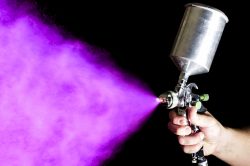
The guidance highlights the serious health risks associated with isocyanate exposure, particularly occupational asthma. One of the document’s most powerful messages is that the greatest danger often comes from paint mist that cannot be seen under normal lighting conditions. Consequently, workers can be exposed without realising the extent of the hazard.
For LEV professionals, the document provides a useful overview of the factors required for effective exposure control, including spray booth performance, clearance times, air-fed respiratory protective equipment, biological monitoring and health surveillance. Importantly, HSE emphasises that no single control measure should be relied upon in isolation.
INDG388 should be viewed as an introduction to good practice rather than a detailed technical standard. It provides an excellent starting point for duty holders seeking to understand their responsibilities and the measures necessary to protect workers from one of the most significant occupational respiratory hazards encountered in modern vehicle refinishing operations.
Source Document
Source: Health and Safety Executive (HSE)
Document Type: COSHH Guidance
Status: Current 2026
Last reviewed by LEVCentral: June 2026
Key Learning Points
- Isocyanates are a leading cause of occupational asthma in paint spraying operations.
- Paint mist is often invisible under normal lighting conditions.
- Spray painting should be restricted to properly designed spray booths or spray rooms.
- Booth clearance times should be established, displayed and followed.
- Air-fed breathing apparatus must be worn during spraying and throughout the clearance period.
- Spray booths should operate under slight negative pressure to prevent contamination escaping into the workplace.
- Biological monitoring provides an important means of verifying the effectiveness of exposure controls.
- Health surveillance should be provided for workers exposed to isocyanates.
- Thorough examination and testing of spray booth extraction systems should be carried out at appropriate intervals.
- Managers play a critical role in ensuring controls remain effective over time.
Further Resources
- HSG276 – Isocyanate Paint Spraying: Safely Managing Spray Booths and Rooms
- HSE MR0 – COSHH Essentials in Motor Vehicle Repair: Advice for Managers
- HSE MR1 – Mixing Two-Pack Paint Containing Isocyanate
- HSE MR2 – Spraying Two-Pack Products in a Spray Booth or Room
- HSE MR3 – Cleaning Two-Pack Paint Spray Guns
- HSE G402 – Health Surveillance for Occupational Asthma
- HSE G403 – Health Surveillance for Occupational Dermatitis
- HSE G408 – Urine Sampling for Isocyanate Exposure Measurement
- HSG258 – Controlling Airborne Contaminants at Work
Recommended Learning
- M200 Basic Principles in Occupational Hygiene
- M501 Measurement of Hazardous Substances
- M505 Control of Hazardous Substances
- M507 Health Effects of Hazardous Substances
- P304 Fundamentals of CoSHH Risk Assessment & Control
- P603 CoSHH PPE
Thought Leadership
INDG388 reinforces a lesson that remains highly relevant today: effective control of isocyanate exposure depends on a complete system of controls rather than a single protective measure. Engineering controls, respiratory protection, health surveillance, biological monitoring and competent management all have a role to play.
For LEV professionals, the document provides a useful reminder that the ultimate purpose of ventilation systems is not airflow, pressure or compliance documentation—it is the prevention of ill health. Demonstrating that controls remain effective over time is therefore just as important as installing them correctly in the first place.

