EH40 – Workplace Exposure Limits 2005 (2020 edition).
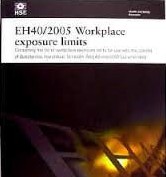
EH40 – Workplace Exposure Limits 2005 (2020 edition).

EH40 is the Health and Safety Executive’s official publication containing Workplace Exposure Limits (WELs) for hazardous substances used in Great Britain.

The document provides occupational exposure limits for hundreds of airborne contaminants including dusts, fumes, fibres, gases, vapours and mists. These limits assist employers, occupational hygienists and health and safety professionals in assessing whether worker exposure is being adequately controlled under the Control of Substances Hazardous to Health Regulations (COSHH).

EH40 is a cornerstone document for workplace exposure assessment and is widely used during occupational hygiene surveys, COSHH assessments, LEV evaluations and compliance monitoring programmes.

Topics covered include:

  • Workplace Exposure Limits (WELs)
  • Long-Term Exposure Limits (LTELs)
  • Short-Term Exposure Limits (STELs)
  • Dust exposure limits
  • Fume exposure limits
  • Occupational exposure monitoring
  • Respiratory hazards
  • Chemical hazard assessment
  • COSHH compliance

This resource is relevant to:

  • Occupational Hygienists
  • LEV Designers
  • P601 TExT Engineers
  • LEV Consultants
  • Exposure Monitoring Specialists
  • COSHH Assessors
  • Health & Safety Professionals
  • Occupational Health Practitioners
  • Duty Holders

Source Document

View the HSE guidance here:

Source: Health and Safety Executive (HSE)
Document Type: Workplace Exposure Limits Guidance
Status: Current (updated periodically)
Last reviewed by LEVCentral: June 2026

EVCentral Expert Commentary

EH40 is arguably one of the most frequently referenced occupational hygiene documents in the UK and forms the basis of many workplace exposure assessments.

The publication contains Workplace Exposure Limits (WELs), which represent airborne concentrations of hazardous substances that employers should not exceed. The limits are intended to support COSHH compliance and help organisations assess whether exposure control measures are performing effectively.

However, one of the most common misunderstandings surrounding EH40 is the belief that compliance with a WEL automatically means workers are adequately protected.

In reality, COSHH requires employers to prevent exposure where reasonably practicable and, where prevention is not possible, to adequately control exposure. A Workplace Exposure Limit should therefore be viewed as one part of a wider exposure-control strategy rather than the sole indicator of acceptable risk.

For LEV professionals, EH40 provides important context when evaluating engineering controls. Exposure monitoring results are often compared against WELs to determine whether LEV systems, process controls and management arrangements are effectively reducing worker exposure.

The document is particularly important when assessing exposure to:

  • Welding fume constituents
  • Respirable crystalline silica (RCS)
  • Wood dust
  • Flour dust
  • Metalworking fluid mist
  • Solvents and VOCs
  • Isocyanates
  • Pharmaceutical substances
  • Process dusts and powders

EH40 should not be used in isolation. Exposure monitoring data should be interpreted alongside:

  • Process observations
  • LEV performance data
  • COSHH assessments
  • Health surveillance findings
  • Workplace practices
  • Occupational hygiene judgement

From a LEVCentral perspective, EH40 supports a fundamental principle of defensible exposure control:

Exposure limits provide a benchmark, but effective worker protection requires competent assessment, suitable engineering controls and ongoing verification of performance.


Key Learning Points

What Is a Workplace Exposure Limit?

A WEL is the maximum concentration of a hazardous substance permitted within workplace air over a specified reference period.

Long-Term and Short-Term Limits

EH40 contains:

  • Long-Term Exposure Limits (typically 8-hour reference periods)
  • Short-Term Exposure Limits (typically 15-minute reference periods)

Both may be relevant depending on the nature of the work activity.

Exposure Monitoring Supports Compliance

Personal exposure monitoring is often required to determine whether worker exposure is below applicable limits.

WEL Compliance Does Not Replace COSHH Duties

Employers must still reduce exposure as far as reasonably practicable even where exposures remain below a published limit.


Further Resources


Recommended Learning


LEVCentral Observation

EH40 is often viewed simply as a table of exposure limits, but its true value lies in how it supports evidence-based decision making.

When combined with competent occupational hygiene assessment, effective LEV design, exposure monitoring and health surveillance, Workplace Exposure Limits provide a valuable benchmark for protecting worker health.