Where Can I Source LEV Labels?
Where Can I Source LEV Labels?

LEV labels play an important role in helping duty holders, LEV testers and maintenance personnel identify test points, inspection status and important performance information directly on extraction systems. HSE guidance recommends that LEV systems are clearly labelled following Thorough Examination and Test, with failed systems particularly highlighted to operators and supervisors.

This resource highlights a practical source of commonly used LEV labels, including Pass, Fail, Test Point and Captor Hood Effective Distance labels. These labels are available in small production runs, making them particularly useful for independent LEV consultants, test engineers and smaller installation companies who may not require large commercial print quantities.


Source Document

Purchase Labels:

Source: LEVShop
Document Type: LEV Labels
Status: Current
Last reviewed by LEVCentral: June 2026


Why LEV Labels Matter

LEV labels provide a simple but highly visible method of communicating important information about the status and operation of an extraction system.

Common examples include:

  • Test record labels
  • Pass labels
  • Fail labels
  • Test point identification labels
  • Hood identification labels
  • Effective captor distance labels

HSE guidance recommends that LEV systems should be clearly labelled so operators and supervisors can easily identify examination status and system condition. In particular, failed systems should be clearly identified to alert users that exposure control may be compromised.


Typical Labels Used During LEV Testing

Most LEV testers routinely use several types of labels during commissioning and Thorough Examination and Test activities.

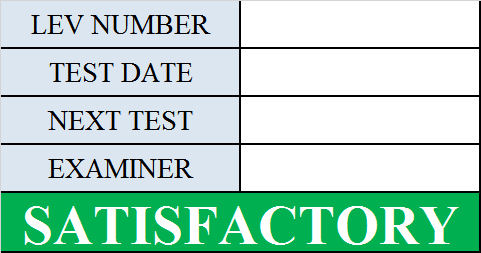
Pass Labels

Used to indicate that the system was found to be effective at the time of examination and test.

Typically include:

  • Examination date
  • Next test due date
  • Examiner details
  • LEV reference number

Fail Labels

Used to identify systems that have failed to achieve adequate control.

These labels provide an immediate visual warning to operators and supervisors and are consistent with HSE recommendations.

Test Point Labels

Used to identify airflow measurement locations on ductwork.

Benefits include:

  • Consistent measurement locations
  • Improved repeatability
  • Faster future testing
  • Better system records

Captor Hood Effective Distance Labels

Used to identify the maximum effective capture distance of receiving hoods and captor hoods.

These labels help operators understand where contaminants must be generated for effective capture to occur.


LEVShop Label Range

LEVShop currently offers a range of commonly used LEV labels including:

  • LEV Pass Labels
  • LEV Fail Labels
  • Test Point Labels
  • Captor Hood Effective Distance Labels

These are available in various sizes and are supplied in practical pack quantities suitable for independent consultants and engineering businesses.


Key LEVCentral Takeaways

  • LEV labels are an important part of effective system management.
  • HSE recommends clear identification of examination status.
  • Failed systems should be clearly identified to operators.
  • Test Point labels improve measurement repeatability.
  • Captor Hood labels help operators position work correctly.
  • Proper labelling supports both compliance and good engineering practice.

Further Resources

Related LEVCentral Resources:


Recommended Learning


Thought Leadership

LEV labels may appear to be a small detail, but they form part of the visible evidence that an extraction system is being actively managed. Good labelling supports communication between designers, installers, testers, maintenance engineers and end users.

Perhaps most importantly, labels help bridge the gap between technical reports and day-to-day operation. A clearly positioned test point label, pass label or effective captor distance label can often provide more practical value to an operator than a report sitting in a filing cabinet. When used consistently, labelling becomes an integral part of maintaining effective exposure control.