HSE Guide – HSG 258 – Controlling Airborne Contaminants at Work – A Guide to Local Exhaust Ventilation (LEV)
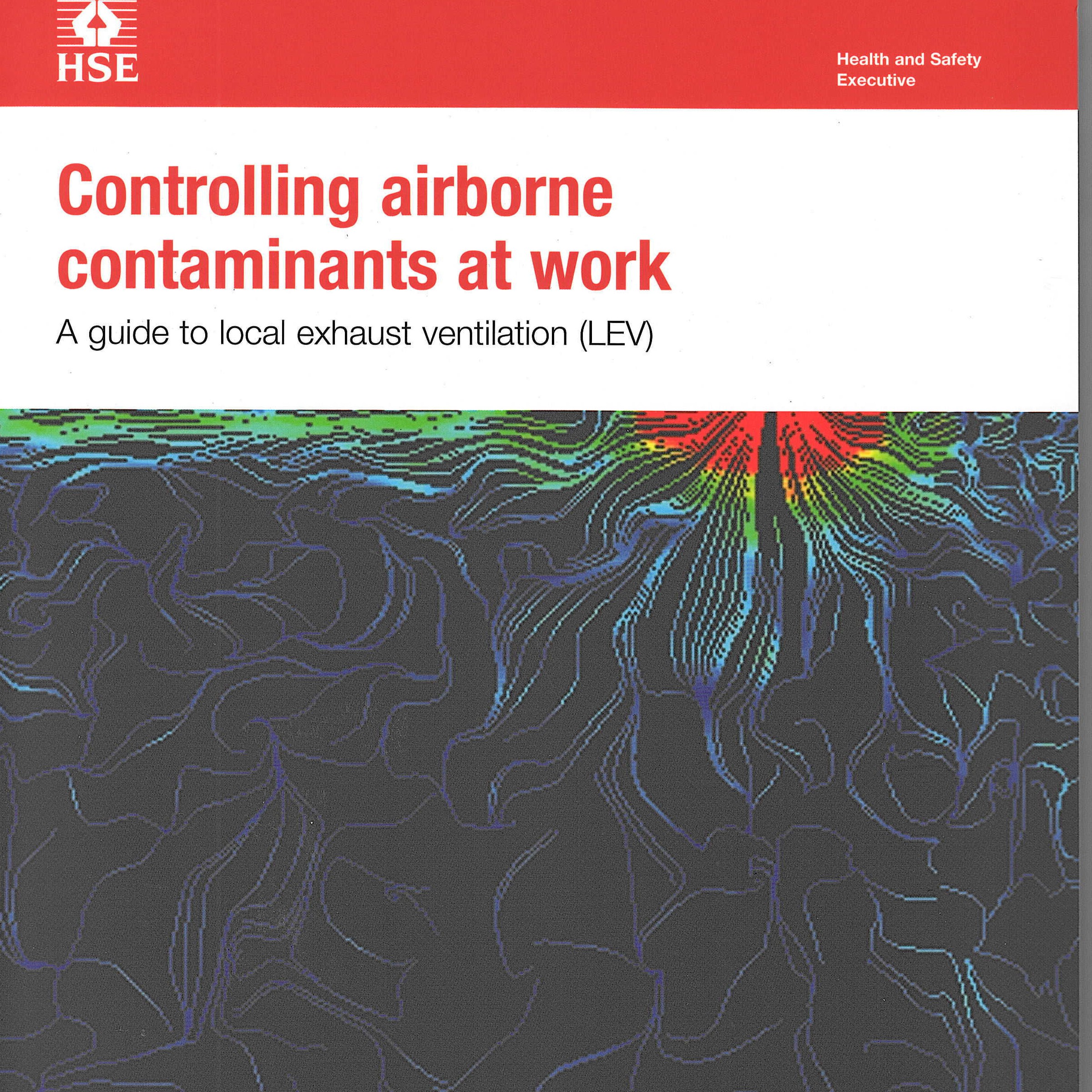
HSG258 provides practical guidance on how Local Exhaust Ventilation systems should be designed, commissioned, operated, maintained and examined.
The document explains:
- How airborne contaminants are generated and controlled.
- The principles of effective contaminant capture.
- Good LEV design practice.
- Commissioning and performance verification.
- User responsibilities and routine checks.
- Thorough Examination and Test (TExT) requirements.
- Management arrangements necessary to maintain effective control.
The guidance supports compliance with the Control of Substances Hazardous to Health Regulations (COSHH) and remains the primary HSE reference document for LEV systems.
What This Resource Covers
This guidance covers:
- LEV design principles.
- Capture hood design and performance.
- Ductwork design.
- Air cleaning devices and filtration.
- Fan selection and performance.
- System commissioning.
- User checks and maintenance.
- Thorough Examination and Test.
- LEV management and ownership.
- Competence and training.
Who Should Read This Resource?
This publication is particularly relevant for:
- LEV Designers/Commissioners/Testers
- Occupational hygienists.
- Health and Safety professionals.
- Facilities managers.
- Maintenance personnel.
- Employers responsible for LEV systems.
- Anyone involved in controlling airborne contaminants at work
Source Document
View HSG258 here:
Source: Health and Safety Executive (HSE)
Document Type: Health and Safety Guidance
Status: Current
Last reviewed by LEVCentral: June 2026
Why This Guidance Matters
HSG258 is significant because it recognises that effective exposure control depends on far more than simply installing an extraction system.
The guidance emphasises that successful LEV requires:
- Appropriate design.
- Correct installation.
- Effective commissioning.
- Planned maintenance.
- Competent examination and testing.
- Ongoing management oversight.
Many LEV failures can be traced not to poor equipment, but to poor management arrangements, inadequate maintenance or a lack of understanding of how systems should operate.
The principles described within HSG258 continue to underpin modern LEV training, testing and compliance activities throughout the UK.
Key LEVCentral Takeaways
- HSG258 remains the definitive HSE guidance on LEV.
- Effective LEV begins with good contaminant capture.
- Commissioning is essential to establish baseline performance.
- User checks play an important role in ongoing system management.
- Thorough Examination and Test is only one part of an effective LEV programme.
- Employers retain responsibility for ensuring LEV remains effective.
- Competence is required throughout the LEV lifecycle.
- Good management is just as important as good engineering.
Recommended Learning
- M200 Basic Principles of Occupational Hygiene
- M501 Measurement of Hazardous Substances
- P600 Methods for Testing Effectiveness of LEV
- P601 Thorough Examination and Testing of LEV Systems
- P602 LEV Design Principles
- P604 Performance Evaluation and Management of LEV Systems
- M505 Control Hazardous Substances
Thought Leadership
Few guidance documents have had as much influence on workplace exposure control as HSG258. More than a technical manual, it established the framework that continues to shape how LEV systems are designed, tested and managed across industry.
Its enduring relevance lies in a simple principle: effective control is achieved not by equipment alone, but by combining sound engineering, competent people and robust management systems. That principle remains as important today as when the guidance was first published.

