HSE Video of Smoke Clearance Testing – Smoke Dispersal in Spray Room
This short HSE video provides a powerful visual demonstration of how airborne contaminants behave inside a typical spray room. Using artificial smoke and accelerated playback, the video illustrates how contaminants can remain suspended within the workspace long after spraying activities have ceased, despite the presence of extraction systems.
The video reinforces the importance of understanding smoke clearance times, ventilation effectiveness and the need for workers to remain protected until airborne contaminants have been fully removed from the enclosure. Although originally produced for the motor vehicle refinishing industry, the principles demonstrated are equally relevant to many enclosed processes where hazardous mists, fumes or dusts may remain airborne after work activities have stopped.
Source Document
View Video here:
Source: Health and Safety Executive (HSE)
Document Type: HSE Video
Status: Current
Last reviewed by LEVCentral: June 2026
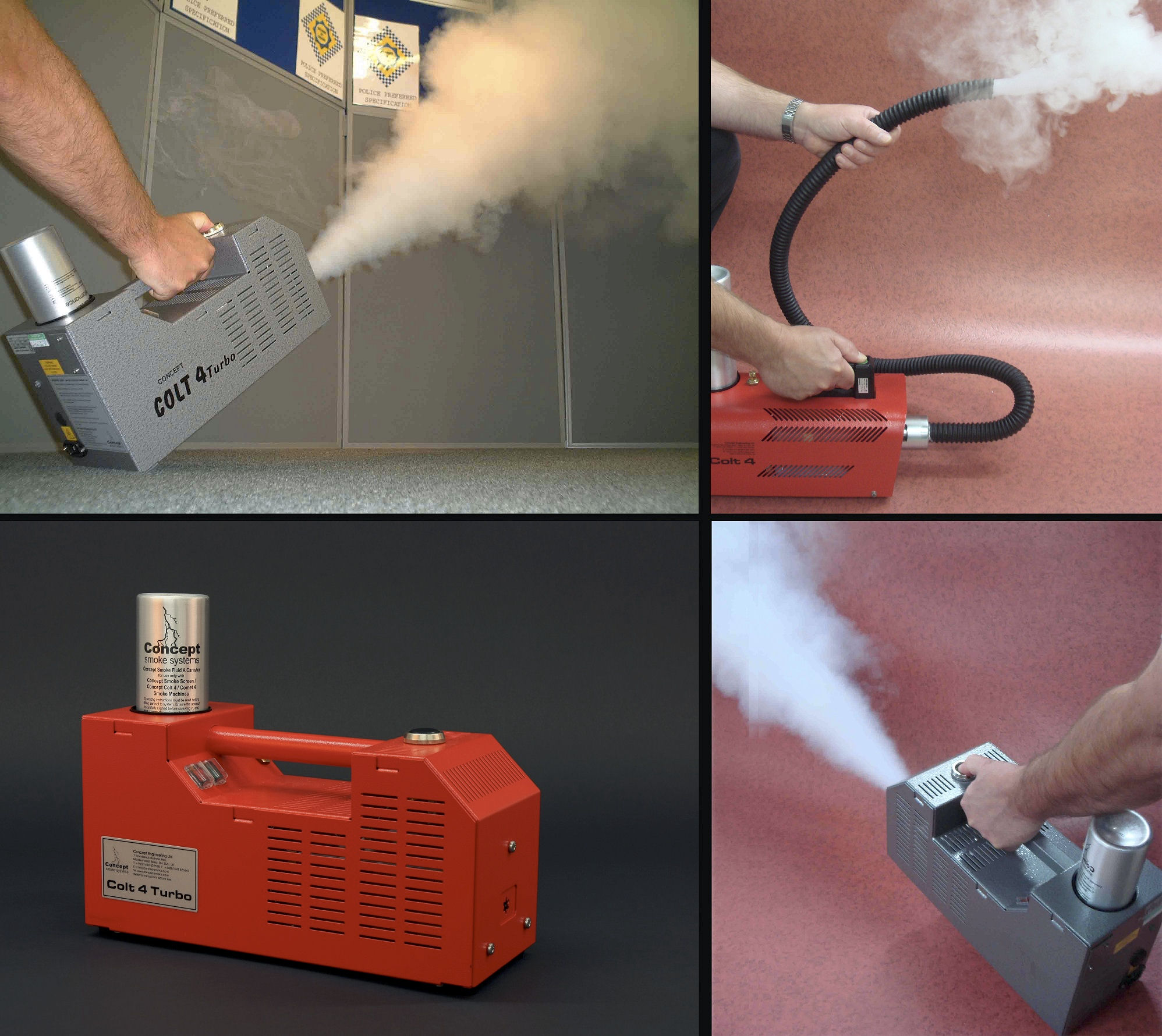
Buy Smoke Generators, Small, Medium & Large
Purchase Smoke Generators:
What This Resource Covers
This resource explains:
- Smoke clearance testing principles
- Airflow behaviour within spray rooms
- Why contaminants may remain airborne after spraying
- Clearance times and worker protection
- The use of artificial smoke for airflow visualisation
- The relationship between smoke testing and LEV performance
- Practical implications for LEV testing and occupational hygiene
Why This Guidance Matters
One of the most common misconceptions surrounding ventilation systems is that contaminants are removed immediately once extraction is operating.
The HSE video demonstrates that this is often not the case. Smoke introduced into the spray room disperses rapidly throughout the enclosure and then appears to linger, with relatively slow movement occurring throughout much of the workspace. Directional airflow is only clearly visible close to extraction points and air inlets.
The behaviour shown in the video mirrors the way paint mist and other airborne contaminants behave during real work activities. This is particularly important where hazardous substances such as isocyanate-containing paint products are used. HSE notes that contaminant levels within spray rooms have been measured at many times the workplace exposure limit and may take significant time to clear following spraying operations.
Smoke Clearance Testing and LEV
Smoke clearance testing is commonly used to establish how long an enclosure takes to remove airborne contaminants once the process has stopped.
The technique involves:
- Filling the enclosure with artificial smoke
- Operating the extraction system
- Measuring the time required to completely clear the smoke
- Identifying stagnant areas or dead spots
- Checking for leakage from the enclosure or ductwork
The resulting clearance time can then be displayed for operators so they know when it is safe to remove respiratory protective equipment or enter the enclosure without exposure risks.
Key LEVCentral Takeaways
- Airborne contaminants often remain suspended far longer than operators expect.
- Smoke provides an excellent visual representation of contaminant behaviour.
- Extraction systems may only create obvious directional airflow close to inlets and exhaust points.
- Clearance times should be established and communicated to workers.
- Smoke testing can identify dead spots and ineffective airflow patterns.
- Clearance testing forms an important part of evaluating enclosure performance.
- Workers should not remove respiratory protection until the enclosure has fully cleared.
Further Resources
Related LEVCentral Resources:
- HSG258 – Controlling Airborne Contaminants at Work
- HSG261 – Health and Safety in Motor Vehicle Repair
- Understanding Captor Hood Performance
- Introduction to Smoke Testing LEV Systems
- Time to Clear the Air – A Worker’s Guide to LEV
- LVHV and On-Tool Extraction Resources
Recommended Learning
- M200 Basic Principles of Occupational Hygiene
- M501 Measurement of Hazardous Substances
- M505 Control of Hazardous Substances
- P600 Methods for Testing Effectiveness of LEV
- P601 Thorough Examination and Testing of LEV Systems
- P602 LEV Design Principles
- P604 Performance Evaluation and Management of LEV Systems
Thought Leadership
The value of this HSE video lies in its simplicity. Air movement is normally invisible, making it difficult for workers and managers to appreciate how contaminants behave once released into the workplace atmosphere.
By visualising airflow using smoke, the video demonstrates an important occupational hygiene principle: contaminants do not disappear simply because a process has stopped. Understanding how long hazardous substances remain airborne is essential when determining clearance times, selecting respiratory protection and evaluating the effectiveness of ventilation systems.
For LEV professionals, smoke remains one of the most powerful diagnostic tools available because it allows airflow behaviour to be seen rather than assumed.

