HSE INDG297 – Safety in Gas Welding, Cutting and Similar Processes
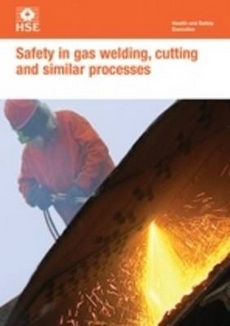
Essential Safety Guidance for Oxy-Fuel Gas Welding and Cutting Operations
HSE INDG297 provides practical guidance for anyone using compressed gases for welding, flame cutting, heating, brazing, soldering and similar hot-work activities.
The leaflet focuses on the safe use of portable oxy-fuel gas equipment and explains the precautions required to prevent fire, explosion, burns and other serious incidents associated with gas welding and cutting operations.
Although often viewed primarily as a safety document, INDG297 also contains important considerations for occupational hygiene and LEV professionals because many gas welding and cutting processes generate airborne contaminants that require effective exposure control.
The guidance covers:
- Oxy-acetylene equipment
- Oxy-propane equipment
- Gas cylinders
- Pressure regulators
- Flashback arrestors
- Hoses and connections
- Fire prevention
- Explosion prevention
- Hot-work safety
- Equipment inspection and maintenance
This resource is relevant to:
- Welders/Fabricators
- LEV Designers/P601 TExT Engineers
- Occupational Hygienists
- Maintenance Engineers
- Construction Contractors
- Health & Safety Professionals
- Duty Holders
Source Document
View the HSE guidance here:
Source: Health and Safety Executive (HSE)
Document Type: HSE Guidance Leaflet
Status: Current
Last reviewed by LEVCentral: June 2026
LEVCentral Expert Commentary
Gas welding and cutting remain widely used throughout industry despite the growth of alternative technologies such as plasma cutting, laser cutting and mechanised welding systems.
Portable oxy-fuel equipment continues to be used extensively because it is versatile, relatively inexpensive and capable of operating in locations where electrical equipment may be impractical.
However, the hazards associated with gas welding equipment should never be underestimated.
The combination of:
- Flammable gases
- Oxidising gases
- High temperatures
- Ignition sources
- Pressurised cylinders
creates the potential for serious incidents if equipment is poorly maintained or used incorrectly.
One of the most significant risks addressed by the guidance is flashback.
Flashback occurs when a flame travels back through the welding torch and potentially into the hose assembly or gas cylinder system. Without suitable protection, this can result in catastrophic equipment failure and potentially fatal consequences.
The guidance therefore places significant emphasis on:
- Flashback arrestors
- Non-return valves
- Equipment maintenance
- Correct operating procedures
- Operator training
From a LEVCentral perspective, the document also provides an important reminder that process safety and occupational hygiene are often closely linked.
Whilst INDG297 focuses primarily on fire and explosion hazards, gas welding and thermal cutting operations frequently generate:
- Welding fume
- Metal oxides
- Nitrogen oxides
- Carbon monoxide
- Ozone
- Combustion products
These contaminants may require effective Local Exhaust Ventilation (LEV) and exposure-control measures in addition to the safety precautions described within the guidance.
Key Learning Points
Oxy-Fuel Equipment Requires Careful Management
Compressed gases and ignition sources create a combination of hazards that must be carefully controlled.
Flashback Protection Is Essential
Flashback arrestors and non-return valves are critical safety devices that help prevent flames travelling back into hoses and gas systems.
Equipment Inspection Prevents Incidents
Regular inspection and maintenance of hoses, regulators, torches and safety devices can significantly reduce the likelihood of accidents.
Hot Work Creates Multiple Hazards
Gas welding and cutting activities can generate fire, explosion and occupational health risks simultaneously.
Exposure Control Should Not Be Forgotten
Many thermal processes generate hazardous airborne contaminants that may require LEV systems or other exposure-control measures.
Topics Covered by the Guidance
Gas Cylinders
Safe storage, handling and transportation of compressed gas cylinders.
Regulators and Pressure Control
Guidance on selecting, fitting and maintaining regulators used with oxygen and fuel gas systems.
Hoses and Connections
Inspection and maintenance requirements designed to prevent gas leaks and equipment failures.
Flashback Arrestors
Use of flashback arrestors and non-return valves to prevent reverse gas flow and flame propagation.
Safe Lighting and Shutdown Procedures
Practical advice on correct operating procedures for welding and cutting equipment.
Fire Prevention
Control measures designed to reduce the risk of fires associated with hot-work activities.
Occupational Hygiene Considerations
Welding Fume Generation
Gas welding and cutting processes can generate airborne contaminants requiring suitable exposure controls.
Local Exhaust Ventilation
LEV systems may be required where welding fume or combustion products are generated.
Confined Space Working
Additional precautions may be required where gas welding or cutting is undertaken within confined or poorly ventilated environments.
Exposure Monitoring
Occupational hygiene assessments may be necessary to evaluate worker exposure to welding fume and combustion products.
Further Resources
- HSE Enforcement Changes – Mild Steel Welding Fume
- IARC Monograph 118 Welding, Molybdenum Trioxide and Indium Tin Oxide
- BOHS Guidance on Monitoring Exposure to Welding Fume
- HSG258 – Controlling Airborne Contaminants at Work
- EH40 Workplace Exposure Limits
Recommended Learning
- M200 Basic Principles of Occupational Hygiene
- M501 Measurement of Hazardous Substances
- P601 Thorough Examination and Testing of LEV Systems
- P602 LEV Design Principles
- P604 Performance Evaluation and Management of LEV Systems
Thought Leadership
- Welding Fume Control Beyond Compliance
- Defensible Exposure Control Strategy
- Defensible LEV Commissioning
- Integrating Process Safety and Occupational Hygiene
LEVCentral Observation
INDG297 serves as an important reminder that welding and cutting operations involve more than exposure to airborne contaminants.
Effective risk management requires consideration of fire, explosion, pressure systems, hot work and occupational health hazards simultaneously.
Whilst modern attention often focuses on welding fume exposure, many of the most serious incidents continue to arise from failures in basic gas safety management.
Organisations that successfully integrate process safety and exposure control are typically best positioned to protect both workers and property.

